




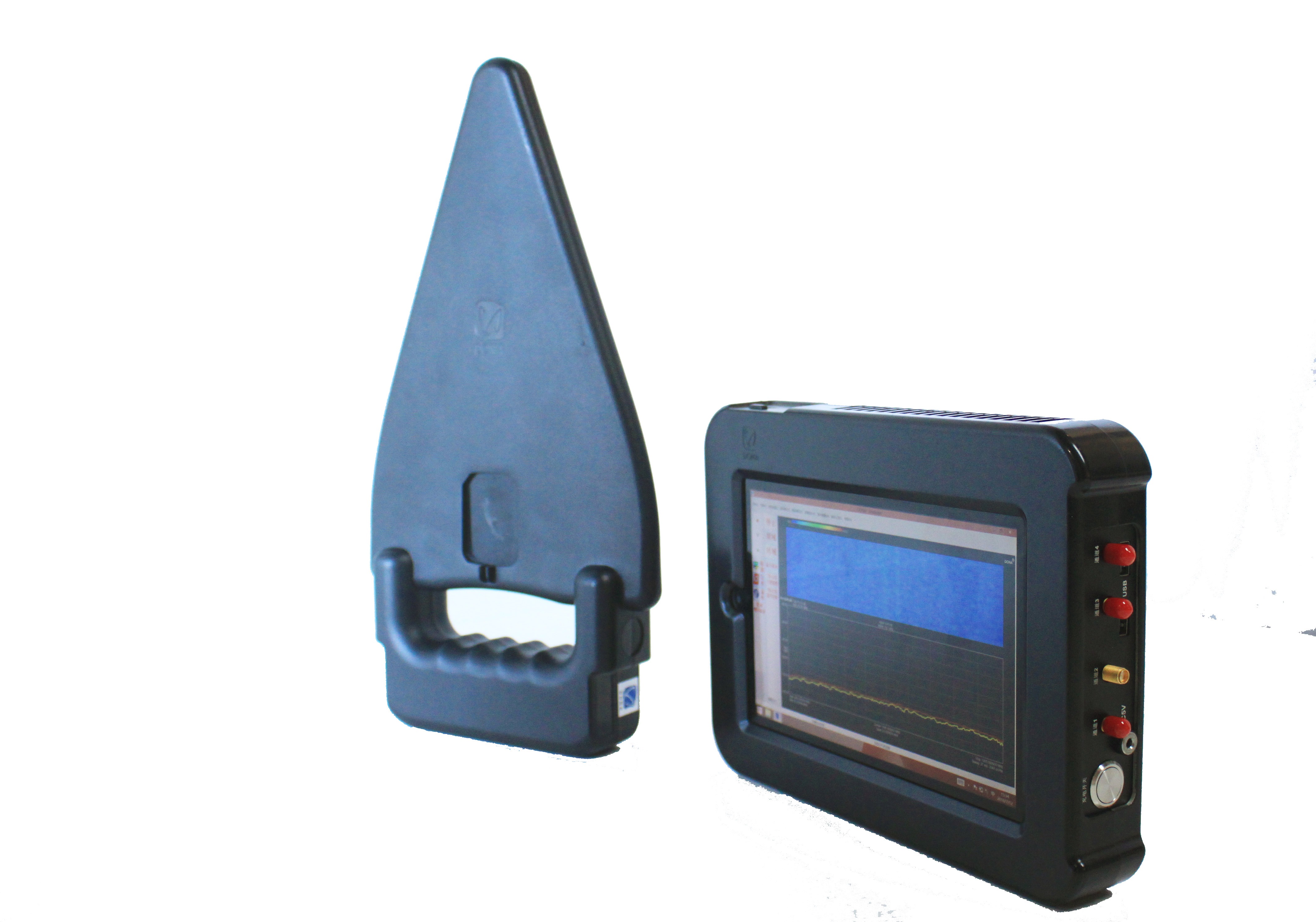
Spectrograph


Spectrum analyzer is an instrument to study the spectrum structure of electrical signals. It is used to measure signal parameters such as signal distortion degree, modulation system, spectrum purity, frequency stability and cross modulation distortion. It can be used to measure some parameters of amplifier and filter circuit system, and is a kind of multi-purpose electronic measuring instrument. It can also be called frequency domain oscilloscope, tracking oscilloscope, analysis oscilloscope, harmonic analyzer, frequency characteristic analyzer or Fourier analyzer. Modern spectrum analyzers can display the analysis results in analog or digital mode, and can analyze the whole range of radio frequency signals from very low frequencies up to 1 Hz to submillimeter bands. If the digital circuit and microprocessor are used inside the instrument, it has the function of storage and calculation; Configuration of standard interface, it is easy to construct automatic test system.
The main function of the spectrum analysis system is to display the spectrum characteristics of the input signal in the frequency domain. Spectrum analyzer according to the signal processing method, there are generally two types; Real-Time Spectrum Analyzer and Sweep-Tuned Spectrum Analyzer. The function of the real-time frequency analyzer is to display signal amplitudes in the frequency domain at the same instant. The working principle is that the corresponding filters and Detector are detector for different frequency signals, and then the signals are transmitted to CRT or LCD display instruments through synchronous multiplex scanner for display. Its advantage is that it can show Periodic Random Waves in the instant reaction, its disadvantage is that the price is high and the performance is limited by the frequency range, the number of filters and the maximum Switching Time. The most commonly used spectrum analyzer is the scan tuned spectrum analyzer, whose basic structure is similar to that of a superheterodyne receiver. The working principle is that the input signal is directly applied to the mixer through the attenuator. The adjustable local oscillator generates the linear oscillation frequency at any time through the scan generator synchronized with the CRT. The IF signal is amplified, filtered and detected, and sent to the vertical direction board of CRT. Therefore, the correspondence between signal amplitude and frequency is displayed on the vertical axis of CRT. Low RBW is helpful to the resolution and measurement of signals of different frequencies, low RBW will filter out the signal components of higher frequencies, resulting in distortion when the signal is displayed, and the distortion value is closely related to the set RBW. High RBW is helpful to the detection of wide-band signals, which will increase the Noise Floor and reduce the measurement sensitivity. It is easy to hinder the detection of low intensity signals, so the appropriate RBW width is an important concept for the correct use of spectrum analyzer.